AI-POWERED ANDROID SETUP
A few steps. Your phone is ready to begin.
A phone that is not listed can still begin self-service diagnostics. FebPhone uses AI to help adapt more Android devices.
Only need SMS? Install the server APK and follow its permission prompts; Root is not required. Download server APK ↗
Your setup path
Root your phone
Use the Root instructions for your exact device and back up your data. Return here once Magisk is working.
Open the official Magisk guide ↗Install the matching ZIP
In Magisk, open Modules → Install from storage and select the matching FebPhone ZIP. The server app is included.
Check package compatibility and version ↓Restart the phone
After Magisk finishes installing the module, restart the phone to load the included app and permissions.
Find FebPhone
After restarting, look for FebPhone in your app list. You do not need to install another APK.
Open the app and follow the prompts
Sign in or bind your account, then complete the permissions and background-service checks shown on the home screen. Keep the phone online.
See where to tap. ↓Let the automatic checks finish
Opening or returning to the app refreshes the hardware, permissions and audio-adapter checks. Follow any remaining setup prompts.
Use it—or start AI adaptation
Supported and checks passed
Follow the client pairing guide to link this phone, check it is online and start using the available features. How to link your device →Not yet adapted
Submit a diagnostic request. AI helps analyze your device and prepare the next adaptation steps. Start self-diagnostics →
Start self-service diagnostics here.
No log export or manual compilation. Submit through the app and follow the next prompts.
Open Audio assessment & adaptation
Find this entry on the Android server home screen. Confirm that your account is bound and the service is online.
Choose Submit diagnostics for analysis
Read the upload details, select the consent checkbox and confirm Upload and request analysis.
Follow your request
AI analyzes the submitted evidence. If more information is needed, follow the app’s instructions; no need to send a full system log.
Automatic checks and background diagnostics do not submit an adaptation request for you. Complete the consent-and-submit step to begin.
See where to tap.
App interface examples. Select an image to enlarge it and read the details.
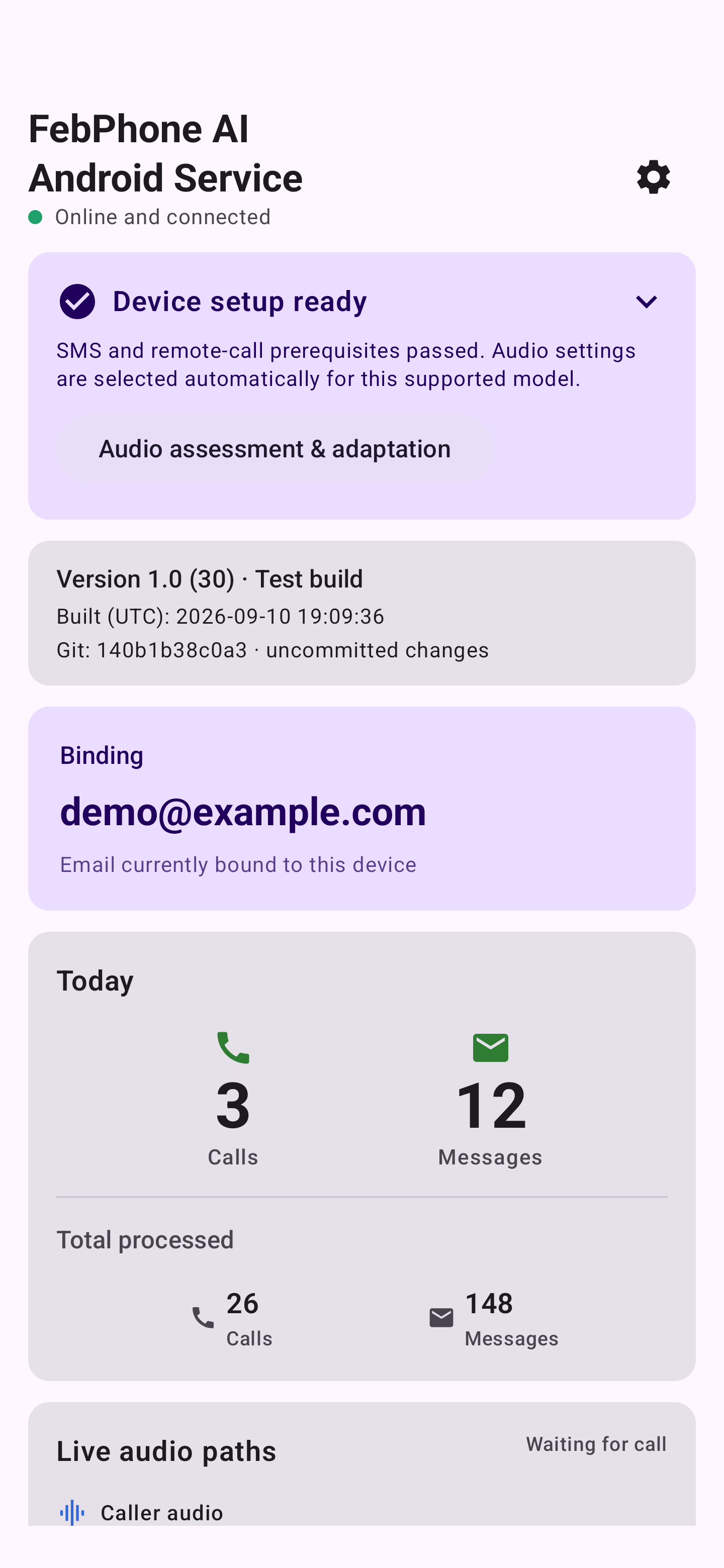
Your Android service phone
Actual App interface with synthetic demonstration data.
View full size ↗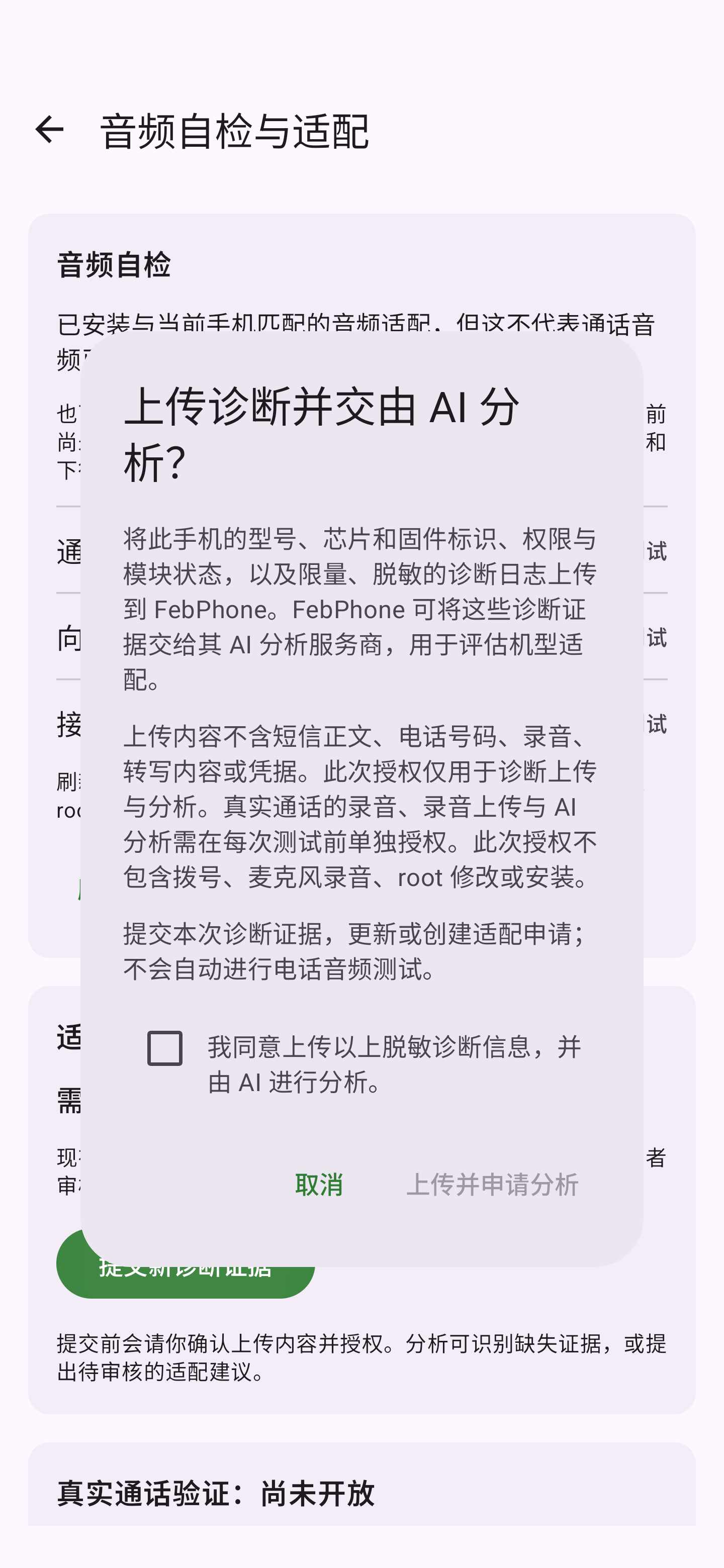
Confirm diagnostic upload contents
Diagnostic upload consent example from the current download. Review the device information and redacted logs, then tick the consent box and submit. Follow the instructions in your assigned version for subsequent installation and call testing. Actual App interface with synthetic demonstration data.
View full size ↗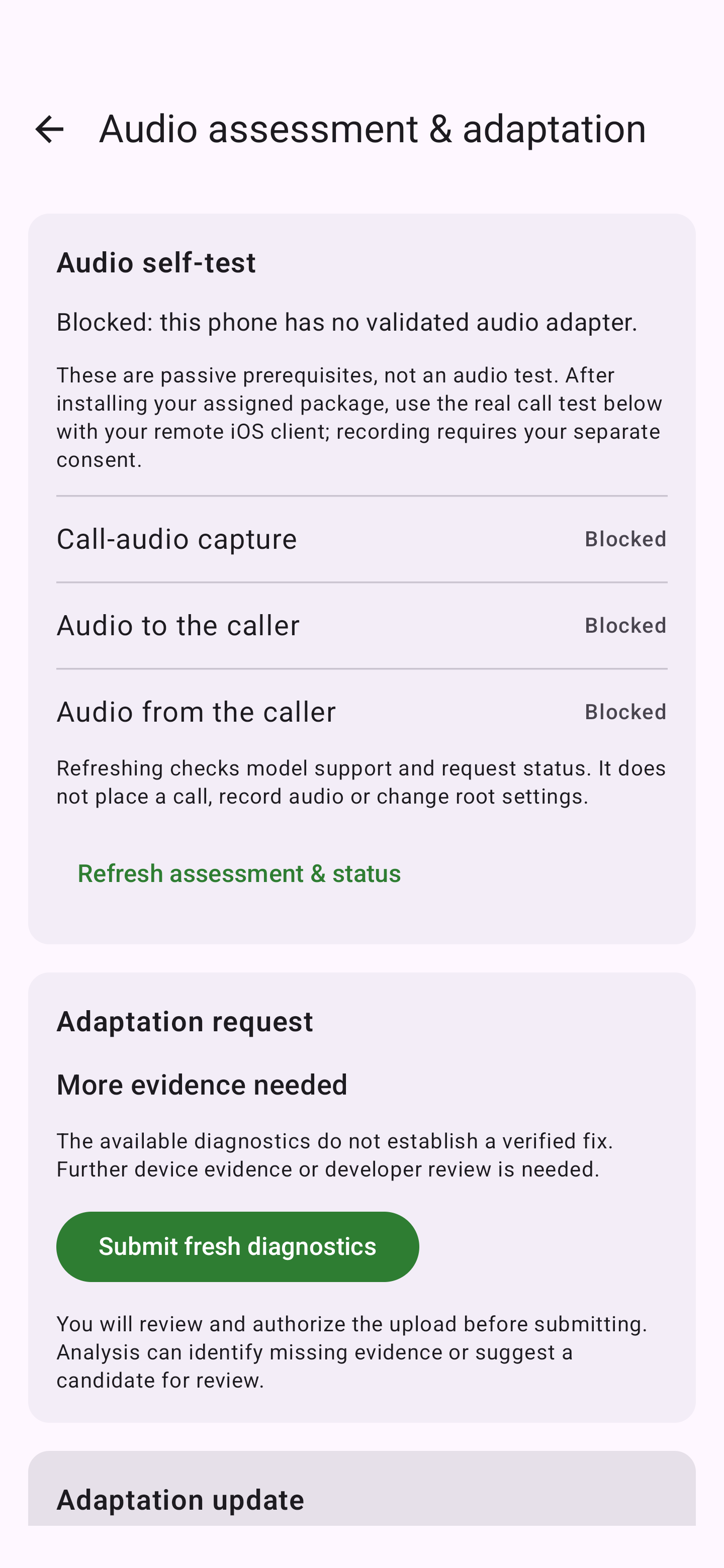
Audio checks and adaptation requests
Audio capture, uplink and downlink checks, with guidance when more diagnostics are needed. Actual Android interface with isolated demonstration data, not a live test result.
View full size ↗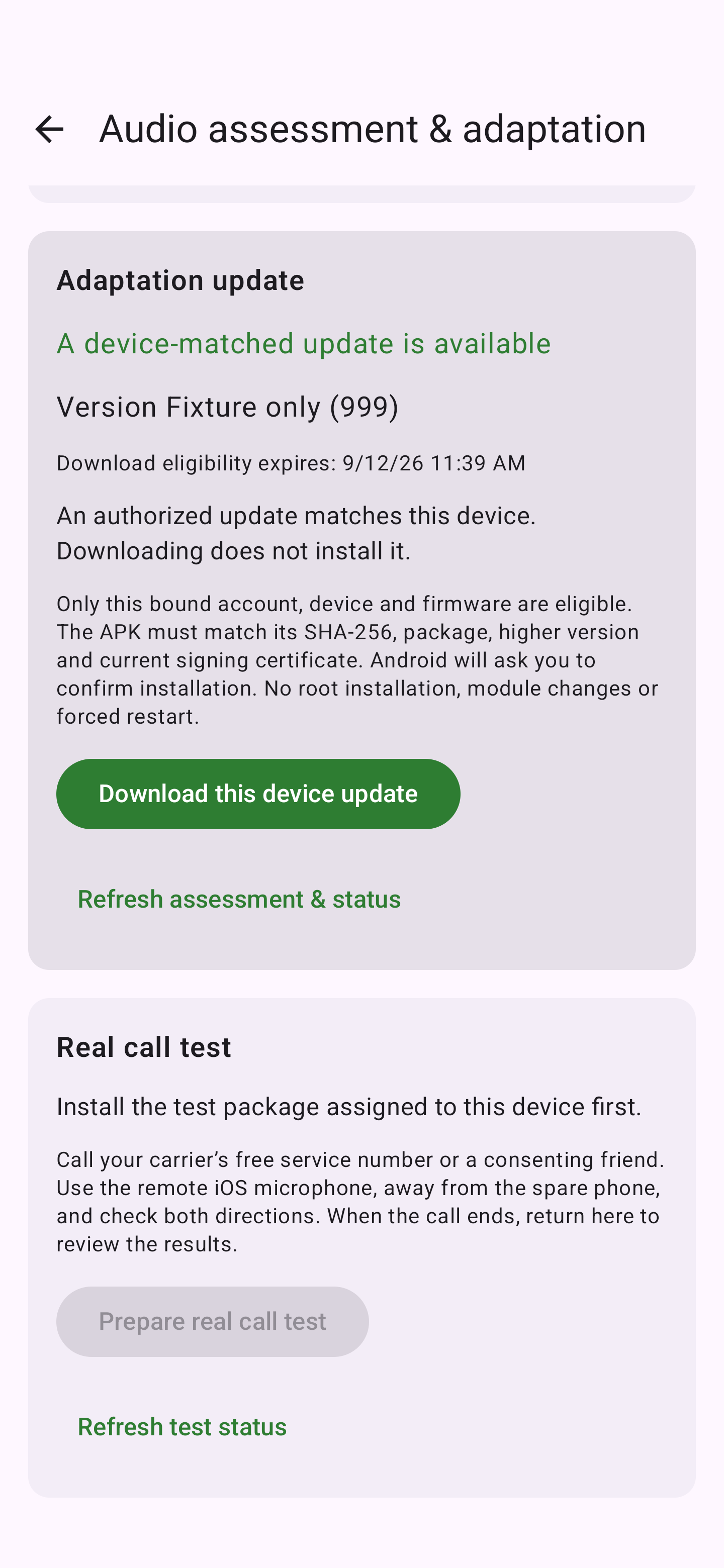
Updates matched to your device
Download a device-matched test package, then confirm installation in Android before testing again. Actual interface with demonstration data; “Fixture only (999)” is not a released version.
View full size ↗What is uploaded?
- Device model, chipset, Android and firmware versions.
- Permission, connection, module and audio-capability status.
- A limited set of recent, redacted app diagnostic logs.
This request excludes SMS content, phone numbers, recordings, transcripts and credentials.
After the current test app is opened, linked to your account and online, it automatically uploads redacted operational diagnostics. An AI adaptation request still needs your separate confirmation.
Automatic checks do not place calls or start recording. Recording for a later call test requires separate consent.
AI helps you move from diagnostics to a tested version.
When an adaptation candidate is ready and reviewed, a dedicated test build can be compiled and you will be notified. Follow that version’s update and testing instructions.
- AI analysis
- Dedicated test build
- Automatic checks
- Human call confirmation
- Reviewed directory entry
The current general download starts with a diagnostic request. Later update and call-test screens depend on the dedicated version you receive. Adaptation time depends on the hardware and test results. Downloading or compiling a build does not by itself mean call audio has passed.
Installation notes and help
Check package compatibility and version
Root ZIPs contain device-specific audio components. Check the supported model and firmware before installing. If no package matches your phone, use the APK to submit diagnostics first.
Check supported models and firmware ↗
The ZIP includes the app and mounts it as a system privileged app on restart. You do not need to write to the system partition manually.
Follow the matching update instructions and install over the existing app. Keep your account binding and data; do not uninstall or clear app data.
SMS only, or a first diagnostic request
Install the APK on your home Android phone, allow this installation source when Android asks, then open FebPhone and follow the prompts.
Already using FebPhone?
Follow the matching update instructions and install over the existing app. Keep your account binding and data; do not uninstall or clear app data.
App missing, offline or still showing a setup prompt?
Confirm the module is enabled and restart after installation. Reopen FebPhone with the phone online, then follow the home-screen checks. If needed, send your model, app version and the step where you stopped to support.
Verify your download
Current download options, versions and file checksums are maintained together in the download center.
Versions and file verification →